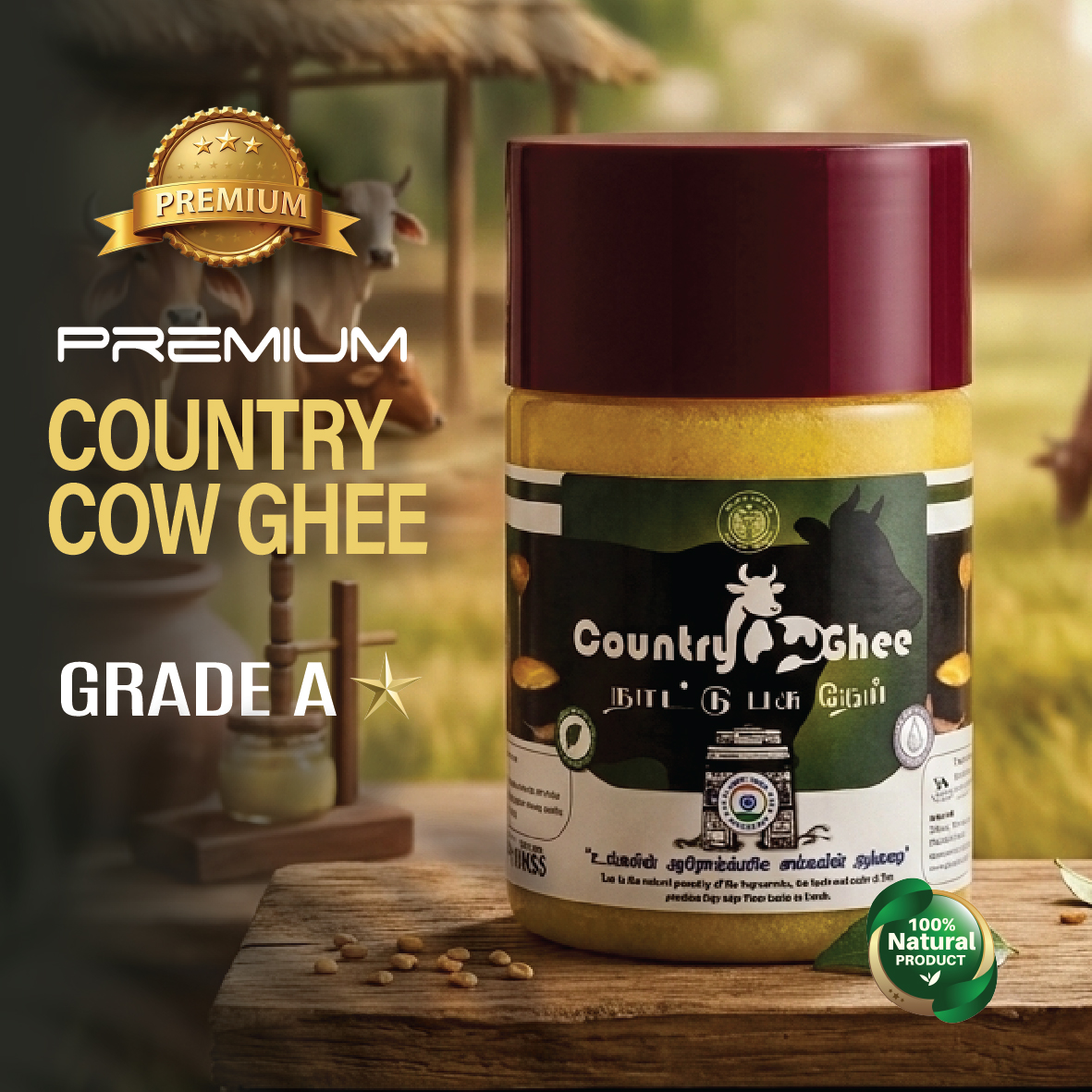
Agasthiar Nattu Pasu Nei
Agasthiar Nattu Pasu Nei
Desi cow VS Jersy cow
1. Indian cows have long horns and big humps where the jersey cows don’t have.
2. Some of the North Indian breeds such as #Gir, #Kankrej, #Tharparkar cows have long dewlap and ears with long loose coat to cool their body as the temperature in some part of North India Soars high. But the Jersey cow’s doesn’t have these as they are from the cold climate of UK
.3. Indian cows gives more calves during their lifetime average of more than 10-12 and some can go beyond 15 but the Jersey cows gives less calves in their lifetime. So the amount of milk produced by Indian cows during their lifetime is more when compared to the Jersey cow.
4. The Indian calf’s takes a longer time to get impregnated generally 30-36 months, whereas the Jersey breeds calves takes 18-24 months.
5. Indian cows produce A2 beta-casein a genetic variant of Amino acid commonly found in Indian breeds, whereas the jersey cows produce A1 milk where this genetic variant of beta casein is not found
.6. The dung of the Indian cows contains more microbes and micro nutrients approximately 85-90% whereas the Jersey cow contains 50-60% only. Hence when the Indian cow dung is used in organic farming we will get good results within short time because of its composition.
A1 Milk VS A2 Milk
The key difference between the two types of milk is the crucial A2 variety of beta casein protein, which is found in the milk of the zebu cows, camel, goat, donkey, buffalo, yak, sheep and even jersey cows. Indian cattle, scientifically known as Bos Indicus, fall in the zebu category. Milk from the European Bos Taurus breeds like Holstein, which spread across the developed world due to their high milk yield, contain the A1 variant of beta casein protein, which has been related to allergies and serious health conditions.Traditional knowledge in India agrees with science here. Farmers and cattle rearers across the spectrum vouch for milk from indigenous cows and its higher suitability for children’s growth, both physical and mental, than milk from high-yielding exotic varieties. They, however, exclude the Jersey cow, which science says produces A2 milk, from their list of good milk.
How is it different from regular ghee?
Why is it so special and how did it earn the precursor Nattu maadu Ghee Well. First things first. To put it precisely, Agasthiar ghee is made from pure country cow’s milk. It is produced after enormous churning of buttermilk and heating butter at the right temperature, in a traditional method for that aromatic and rich flavour.
Agasthiar Ghee in Cuisines:The presence of Agasthiar ghee in our daily life is humongous even today, with every foodie reaching out for a spoonful of this dairy wonder, to top their dishes. South Indians swear by their, ‘Ghee roast’ the crispy dosas, mix with podi with Idly, fluffy idlis dipped in freshly brewed ‘neyyi,’ while for North Indians, puranpoli, parathas, rotis, biriyani, kichidi and not to forget halwas, laddus are just incomplete, without generous dollops of ghee.
In many Indian families, serving food with freshly melted ghee is a sign of pride, affection and it is a common sight in our families, mothers and grandmothers insisting upon their children to add more ghee to their diet.Like all other traditional foods.
Want to buy please click
Cow( Country) Ghee original ( Pure Nattu Maadu Nei) 300 gm | Lazada